

Anti Inflammatory Diet: The Complete Guide & Grocery List
Inflammation is your body’s natural defense system—it helps fight infections and heal injuries. But when inflammation becomes chronic, it can quietly damage your health over time. That’s where an anti inflammatory diet comes in.
This way of eating isn’t about strict rules or counting calories—it’s about choosing foods that help your body heal, reduce pain, and improve overall wellness. In this guide, we’ll cover everything you need to know about an anti inflammatory diet—what to eat, what to avoid, and how to make it part of your everyday life.
What Is an Anti Inflammatory Diet?
An anti inflammatory diet is a lifestyle approach that focuses on foods known to fight inflammation in the body. Unlike fad diets, this one is sustainable, delicious, and backed by science.
Instead of focusing on restriction, it emphasizes whole, nutrient-rich foods like fruits, vegetables, healthy fats, and lean proteins. At the same time, it limits processed foods, refined sugars, and unhealthy fats that can fuel inflammation.
Benefits of an Anti Inflammatory Diet
Following an anti inflammatory diet can lead to a wide range of health benefits, including:
- Reduced joint pain – helpful for arthritis and other inflammatory conditions.
- Better heart health – lowers cholesterol and reduces risk of heart disease.
- Improved digestion – supports gut health and reduces bloating.
- Balanced blood sugar – helps prevent type 2 diabetes.
- Boosted energy – whole foods nourish your body and fight fatigue.
- Clearer skin – reduces acne and other skin flare-ups.
- Lower risk of chronic disease – inflammation plays a role in cancer, Alzheimer’s, and autoimmune conditions.
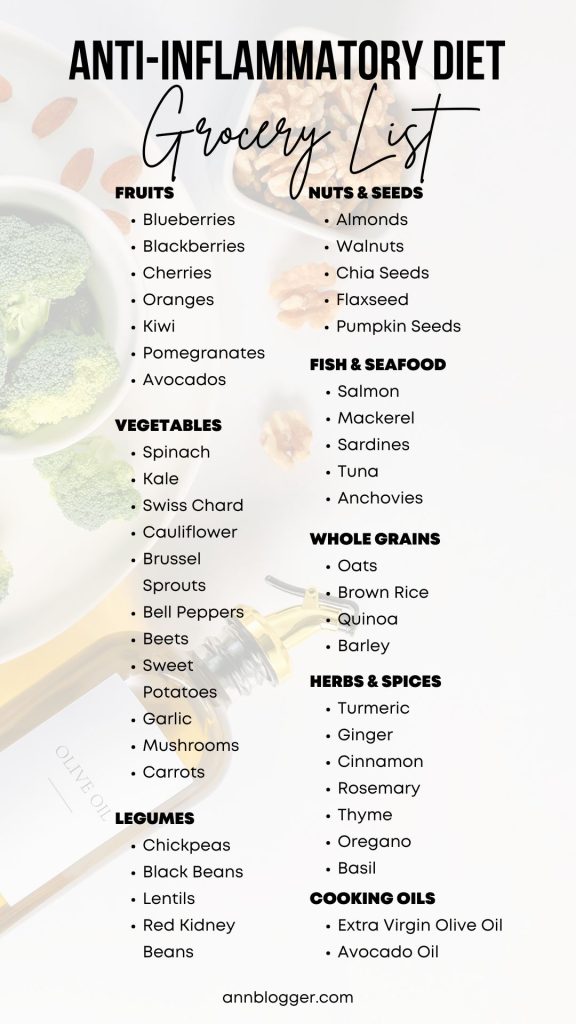
Best Foods for an Anti Inflammatory Diet
To lower inflammation naturally, focus on these powerful foods:
1. Fruits and Vegetables
- Berries (blueberries, strawberries, raspberries)
- Leafy greens (spinach, kale, Swiss chard)
- Cruciferous veggies (broccoli, cauliflower, Brussels sprouts)
- Citrus fruits (oranges, lemons, grapefruits)
- Tomatoes, bell peppers, carrots, and sweet potatoes
Tip: Aim for a “rainbow on your plate” to maximize nutrients.
2. Healthy Fats
- Extra virgin olive oil
- Avocados
- Nuts (almonds, walnuts, cashews)
- Seeds (chia, flax, pumpkin, sunflower)
- Fatty fish (salmon, sardines, mackerel, tuna)
Tip: Omega-3 fatty acids in fish are especially powerful anti-inflammatory agents.
3. Whole Grains
- Oats
- Brown rice
- Quinoa
- Barley
- Whole wheat bread or pasta
4. Lean Protein
- Skinless chicken or turkey
- Eggs
- Plant-based proteins (beans, lentils, chickpeas, tofu, tempeh)
5. Herbs and Spices
- Turmeric
- Ginger
- Garlic
- Cinnamon
- Rosemary and thyme
These add flavor and anti-inflammatory benefits without extra calories.
Foods to Avoid on an Anti Inflammatory Diet
Just as important as what you eat is what you don’t eat. Try to limit or avoid:
- Processed foods (chips, fast food, frozen meals)
- Refined carbs (white bread, pastries, sugary cereals)
- Added sugars (sodas, desserts, candy)
- Trans fats (fried foods, margarine, packaged snacks)
- Excessive red and processed meats (bacon, sausages, hot dogs)
- Too much alcohol
Action Step: Start small. Swap soda for water, or switch from white rice to brown rice.
Simple Anti Inflammatory Meal Ideas
Here are a few easy and tasty ideas to get started:
- Breakfast: Overnight oats with chia seeds, blueberries, and walnuts.
- Lunch: Quinoa salad with spinach, chickpeas, avocado, and olive oil dressing.
- Snack: Apple slices with almond butter.
- Dinner: Grilled salmon with roasted Brussels sprouts and sweet potatoes.
- Dessert: Dark chocolate (70% or higher) with fresh berries.
Lifestyle Tips to Support an Anti Inflammatory Diet
Food is powerful, but lifestyle also matters. Combine your eating habits with these practices for the best results:
- Stay active: Regular movement lowers inflammation—walk, stretch, or do yoga daily.
- Get enough sleep: Aim for 7–9 hours each night.
- Manage stress: Meditation, journaling, or deep breathing can keep stress hormones in check.
- Stay hydrated: Water helps flush out toxins.
- Avoid smoking: Smoking triggers chronic inflammation.
Frequently Asked Questions About the Anti Inflammatory Diet
Is an anti inflammatory diet good for weight loss?
Yes! While it’s not designed as a weight-loss plan, many people naturally lose weight because they’re eating more whole foods and fewer processed items.
How long does it take to see results?
Some people notice less pain and more energy within a few weeks. For long-term benefits, consistency is key.
Can I follow this diet if I’m vegetarian or vegan?
Absolutely. Plant-based proteins, nuts, seeds, and whole grains all fit perfectly into an anti inflammatory lifestyle.
Final Thoughts
An anti inflammatory diet is not a quick fix—it’s a long-term lifestyle choice that can transform your health. By adding colorful fruits and vegetables, healthy fats, lean proteins, and healing spices to your meals, you’ll naturally reduce inflammation and feel better from the inside out.
Remember: small changes add up. Start with one new habit this week—like adding berries to your breakfast or swapping soda for sparkling water. Over time, you’ll create a healthier, more energized version of yourself.